Word Challenge-Daily Word Game
- 4.3
- Rating
- 1.00M
- Installs
- Free
- Price
 Analysis by App-foxy
I tried Word Challenge-Daily Word Game as a small daily word puzzle rather than as a long gaming session, and that is where it makes the most sense. It is a free word game from MeeGame Studio built around guessing the word of the day, with a simple rhythm that fits a coffee break, a commute, or the few minutes before bed. The idea is easy to understand, but the quality of each session depends on how carefully I use guesses, how I react to letter feedback, and whether I treat the puzzle as a repeatable habit instead of tapping random words.
The game has attracted more than a million installs and holds a 4.3 average from roughly thirty-one thousand ratings, so it clearly appeals to people who want an accessible daily challenge rather than a complicated word-game system. I found that its strongest quality is its low entry barrier: I can open it, understand the objective immediately, and start thinking without learning a large rulebook. At the same time, players looking for a huge dictionary, deep progression, multiplayer competition, or a broad collection of modes may find the experience narrower than expected.
How I built a useful daily routine around the puzzle
I keep the puzzle from becoming another task by tying it to a moment that already has a natural pause, such as settling in with coffee or waiting for a kettle. I decide beforehand whether I want to solve in one sitting or leave the pattern in my mind and return later; that small choice helps the daily format feel flexible rather than demanding. From there, the next useful question is what this routine reveals about the game’s current shape.
You May Also Like

 Blood Strike: 2.5 Anniversary
Blood Strike’s Loadouts Turn Every Drop Into a Tactical Gamble
A close look at Blood Strike’s custom loadouts: how fast access to signature weapons reshapes its battle royale rhythm, rewards preparation, and narrows the gap between fights.

 Pandora - Music & Podcasts
Pandora’s Music Is Easy to Start, but Harder to Recover
Pandora’s strength is its low-effort path from a seed to a station. Its weak spot is how much confidence it asks you to place in connection, setup, and quiet recovery.

 8 Ball Pool
 Is Built on Rivalries, Rematches, and Routine
A close look at the rivalries, rematches, shared routines, and unanswered safety questions that turn a quick pool match into a persistent mobile community.

 Samsung Music
’s Quiet Strength Is Playing What You Already Own
Its reach comes less from spectacle than from dependable access to a personal library. That simplicity is both the app’s strongest retention engine and its ceiling.

 AccuWeather: Weather Radar
AccuWeather Review: A Quick, Clear Forecast for Everyday Decisions
For everyday plans, the best forecast is the one you can understand quickly. AccuWeather makes rain timing, radar, and local conditions easy to act on, with a few trade-offs.

 Hill Climb Racing
Why Hill Climb Racing Still Turns Crashes Into One More Run
A tiny car, a bumpy hill and one more upgrade: Hill Climb Racing keeps resurfacing because its simple chaos makes every near-miss feel personal.
More From Our News Desk



The basic workflow is simple, but the order matters
My most reliable approach was to slow down the first guess instead of trying to solve the word immediately. I began with a familiar word containing several different vowels and common consonants. The purpose was not to guess correctly on the opening attempt; it was to collect useful information. A first word that tests repeated letters or unusual combinations can feel clever, but it often gives me less practical guidance than a balanced word with varied letters.
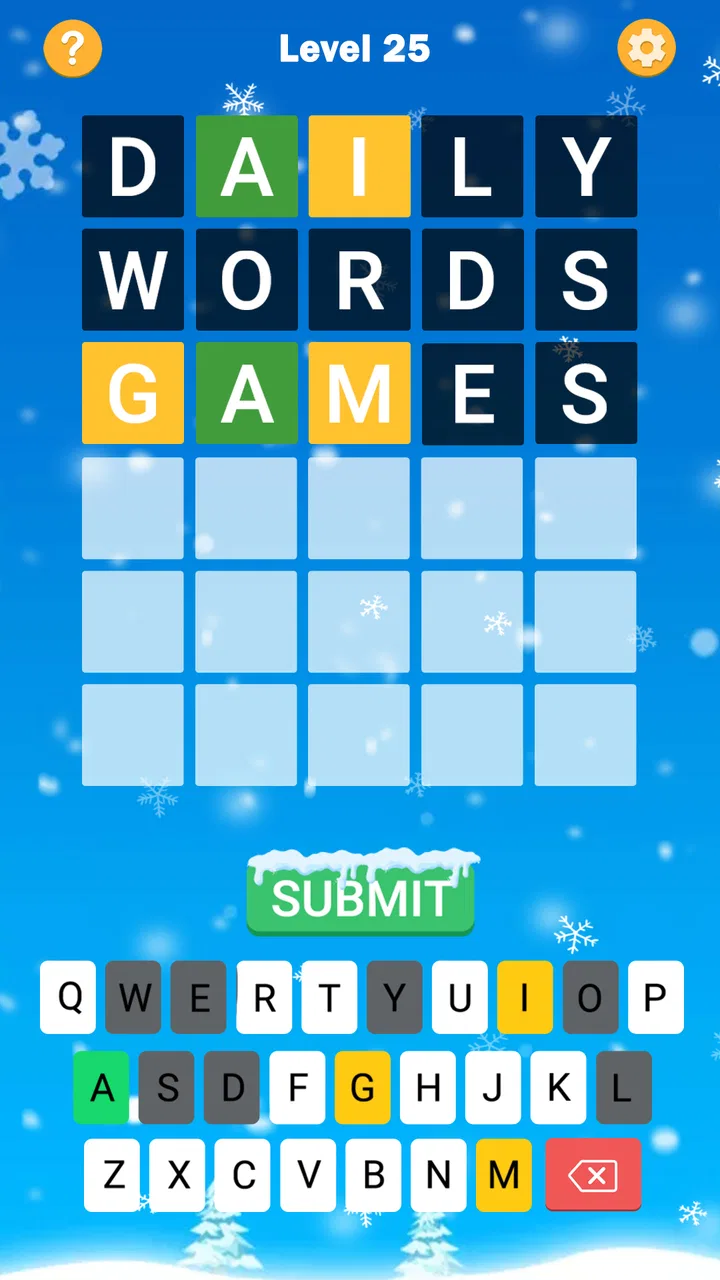
After each attempt, I treated the feedback as a set of constraints. I separated letters that were confirmed in the right position, letters that belonged in the answer but needed moving, and letters that should no longer receive attention. This sounds obvious, yet it is the difference between a thoughtful solve and repeatedly making guesses that ignore what the board has already taught me.
A realistic everyday example is a short break during work. I can play one round, make an opening guess, and then return to the task with the remaining pattern in mind. When I come back, I do not need to restart my thinking from zero: I review the fixed letters, remove the rejected ones, and test a word that answers a specific question. That makes the game feel less like a time sink and more like a compact mental exercise.
I also learned not to spend every guess on a possible answer. Some guesses are better used as information tools. If I know the first and last letters but cannot decide between several middle patterns, a carefully chosen word can test multiple uncertain letters at once. The trade-off is that this may not look like progress on the board, but it can prevent a later mistake caused by committing too early to one attractive possibility.
Use notes mentally, not just visually
The board shows the immediate result of a guess, but experienced play depends on maintaining a small internal list. I keep track of confirmed positions, possible positions, and letters I have ruled out. I avoid treating a misplaced letter as permanently tied to the position where I first saw it. That is one of the easiest ways to waste a turn: recognizing that a letter exists but forgetting that it must move elsewhere.
Repeated letters require extra care. If a letter appears more than once in a guess and the feedback does not support both copies, I do not assume that the answer contains two of them. I use the result conservatively and test the single-letter possibility before building an entire guess around duplication. This habit is especially useful when the remaining pattern looks familiar, because familiarity can encourage careless guesses.
Another practical habit is to read the whole pattern aloud in my head rather than focusing only on the colored or marked positions. A partial pattern can suggest several common words, but the rejected letters often eliminate the most obvious wrong answers. In this game, the information I do not have is less important than the information I have already earned and failed to use.
Why the daily format works for some players
The daily structure gives the game a natural stopping point. I do not feel pushed to keep grinding through an endless level map, and the limited focus makes each puzzle easier to remember. For someone who wants a calm word challenge, that restraint is a strength. It also makes the game suitable for a shared household routine, where different people can discuss strategies without needing a long session or a complicated account of progress.
However, the same structure can feel restrictive. If I am in the mood for continuous play, a daily word does not offer the same volume as a large crossword collection, a word search app, or an anagram game with many rounds. I would choose another category when I want a long session, a story, timed competition, or a steadily expanding set of objectives.
Settings are worth checking before settling into a habit
I recommend opening the available settings before playing regularly, even if the game seems straightforward. The useful reason is not to search for a secret advantage, but to make sure the presentation and interaction suit the way I want to play. I look for options related to sound, notifications, vibration, and visual comfort, then keep only what helps me concentrate. A quiet puzzle is better for a library or bedtime, while a small amount of feedback may make the game feel more responsive in a casual setting.
Notifications deserve particular attention. A daily reminder can help someone maintain a routine, but it can also turn a relaxing game into another interruption. I prefer reminders only when I genuinely want the game to anchor part of my day. If I am already surrounded by alerts, disabling unnecessary prompts keeps the experience calmer and prevents the puzzle from feeling like an obligation.
I also check how the game behaves when I pause and return later. A daily word puzzle is often played in fragments, so the practical question is whether I can leave it without losing my place or accidentally submitting an unfinished thought. I avoid tapping quickly when returning from another app, because a mistaken submission is more frustrating than a difficult word.
Visual settings matter more than many players expect. Word games involve repeated scanning of small letter groups, and poor contrast or excessive brightness can make a short session tiring. I play with the screen comfortable for the room rather than assuming the default is ideal. This is not a strategy for solving faster, but it reduces the kind of eye fatigue that makes me misread a pattern.
Because the game is free, I would also review any purchase prompts with the same care I use in other casual games. Optional items range from ninety-nine cents to eighteen dollars and ninety-nine cents per item. I would not buy anything simply to escape a difficult puzzle; the value of this title comes from thinking through the word, not from turning every obstacle into a transaction. Players who dislike in-app purchase prompts should decide their boundary before playing rather than in the middle of a frustrating round.
Small shortcuts that improve decision-making
The best shortcut I found is to classify every guess by purpose before submitting it. I ask myself whether I am testing vowels, checking a consonant cluster, placing a known letter, or attempting the final answer. If I cannot name the purpose, the guess is probably too random. This takes only a moment and makes the board easier to interpret after the result appears.
I also use a “candidate family” approach. When the pattern suggests several words with the same ending, I do not immediately choose the most familiar one. I compare the alternatives and identify the letter that separates them. Then I choose a word that tests that difference while respecting the letters already ruled out. This is more efficient than cycling through similar guesses that differ in only one untested position.
Another useful shortcut is to delay obscure vocabulary until the common options have been examined. A rare word can occasionally be correct, but reaching for unusual language too early creates noise. I first test ordinary words that fit the known pattern, then consider less familiar possibilities only when the feedback forces me away from everyday choices. This keeps the game approachable without pretending that every solution will be obvious.
I found it helpful to keep a consistent opening style for several days instead of changing the first word after every difficult round. A repeatable starting method gives me a clearer sense of how I personally use information. If I constantly change tactics, I cannot tell whether a problem came from the opening guess, poor follow-up decisions, or a genuinely awkward pattern.
Where the game rewards patience more than speed
There is no real benefit in rushing through a round simply because the interface responds quickly. My fastest solves were not necessarily the ones where I tapped fastest; they were the ones where I paused long enough to eliminate a tempting but unsupported answer. A short delay before submission is valuable when two candidates look nearly identical.
I also avoid solving from visual shape alone. A word can look right because its first and final letters are fixed, while the middle contains a letter I already rejected. Reading each position deliberately catches this mistake. The habit is particularly important on a small screen, where the eye tends to jump over familiar letter combinations.
For players who enjoy sharing the puzzle with friends, I would discuss methods rather than immediately revealing the answer. Explaining why a guess was useful preserves the mental challenge and makes the daily round more social. The game works well as a conversation starter because the rules are easy to communicate, even when the reasoning behind a solution is not.
Limits that experienced players should understand
The game’s simplicity is also its main limitation. It is a focused word challenge, not a complete language-learning course. I would not rely on it to teach definitions, pronunciation, spelling rules, or systematic vocabulary progression. It may encourage careful attention to letter patterns, but that is different from building a structured study plan.
It is also not the right choice for someone who needs a large set of puzzles on demand. A daily format can feel satisfying when I want one contained challenge, but it becomes less attractive during a long trip or a waiting period when I want uninterrupted play. A crossword app, an anagram collection, or a word-search game is a better fit for that use case.
Players who need competitive features should set expectations accordingly. The appeal here is personal deduction and routine, not a complex ranking system or a multiplayer match. If your main motivation is racing another player in real time, comparing detailed performance, or unlocking many competitive tiers, this title may feel too quiet.
The age rating is Everyone, which matches the clean, broadly accessible nature of the word-puzzle format. I would still judge it by the individual player’s needs: younger users may enjoy guessing familiar words, while advanced word-game fans may want more demanding vocabulary or additional modes. The same uncomplicated design that welcomes beginners can leave experts wanting more depth.
Compatibility is reasonably broad for older devices, with Android support beginning at version 7.1. That makes it a practical option for people who do not use a recent phone, although the experience will still depend on the device’s screen and general responsiveness. The current version is 1.3.6, so I would keep the app updated through the normal store process to receive the version intended by MeeGame Studio.
Who should install it, and who should skip it
I would recommend this game to someone who wants a short, repeatable word puzzle with a clear objective and no purchase required to begin. It suits people who enjoy testing vocabulary, noticing patterns, and improving through better guesses rather than through elaborate upgrades. It is also a good choice for a friend who wants a calmer alternative to action games and does not want to commit to a long session.
I would skip it if I wanted a dictionary beside every answer, a lesson plan, a large archive of completed puzzles, or a rich progression system. I would also choose another game if I found daily limits frustrating or if I preferred visual word searches and anagrams over deduction from letter feedback. The title is most enjoyable when its narrow focus feels refreshing rather than restrictive.
For beginners, my advice is to start by learning the feedback system and using each guess deliberately. Do not worry about finding an ideal opening word immediately. For experienced word-game players, the challenge is less about recognizing common patterns and more about controlling assumptions, especially when repeated letters or several plausible candidates appear.
My final assessment after making it a routine
The real strength of Word Challenge-Daily Word Game is its disciplined simplicity. It gives me one compact problem, enough feedback to reason with, and a natural reason to return without demanding a long commitment. I appreciate that I can play it as a quiet personal ritual, but I also recognize that the same narrow design will not satisfy everyone.
MeeGame Studio has positioned this as a free, accessible word game rather than an all-purpose vocabulary platform. The average rating of 4.3 and its audience of around thirty-one thousand ratings suggest that many players find that balance appealing, while the roughly one thousand written reviews indicate an active base willing to discuss the experience. Those figures are useful context, but my recommendation depends more on whether you enjoy the daily format than on popularity alone.
My best advice is to try it with a repeatable method: check the settings, choose an opening guess that gathers information, record rejected letters mentally, and submit a word only when it serves a clear purpose. If that rhythm feels satisfying, the game can become a pleasant daily reset. If you need endless content, teaching tools, or head-to-head competition, look elsewhere. For a free and approachable daily word challenge, though, I think it earns a place on the phone of anyone who enjoys solving carefully rather than merely tapping quickly.
FAQs for Word Challenge-Daily Word Game
01What is Word Challenge-Daily Word Game?
Word Challenge-Daily Word Game is a casual word puzzle designed for players who enjoy testing vocabulary, spelling, and quick thinking. Each session typically presents word-based challenges that can be completed in a short time, making it suitable for daily play. The game is easy to understand, but later challenges may require stronger vocabulary and careful attention.
02How do you play Word Challenge-Daily Word Game?
The basic gameplay revolves around solving daily word puzzles by arranging letters, identifying words, or completing word-related challenges, depending on the selected mode. Players generally interact by tapping letters or entering answers on the screen. Instructions are straightforward, although some puzzles may require experimenting with possible combinations rather than immediately knowing the solution.
03Is Word Challenge-Daily Word Game free to download and play?
The game can generally be downloaded without an upfront charge, allowing users to try its core word challenges before deciding whether it suits them. However, free versions of mobile games may include advertising, optional purchases, or premium features. Before downloading, check the store listing for current information about in-app purchases and any limitations affecting free players.
04Can Word Challenge-Daily Word Game be played offline?
Some parts of Word Challenge-Daily Word Game may remain available without a constant internet connection, particularly previously loaded or standard puzzle content. Nevertheless, online access may be required for daily updates, advertisements, synchronization, leaderboards, rewards, or other connected features. If offline play is important to you, test the game after disabling your connection rather than assuming every mode works offline.
05Is Word Challenge-Daily Word Game suitable for children and all skill levels?
The simple controls and short word puzzles make Word Challenge-Daily Word Game approachable for many players, including casual users and families. Its suitability for children depends on the vocabulary used, advertising, privacy practices, and the age rating shown in the relevant app store. Younger players should use appropriate parental controls, especially if the game offers purchases or external links.
Pros
- Quick daily rounds make it easy to play during short breaks.
- Improves spelling
- vocabulary
- and pattern-recognition skills.
- Simple interface is accessible for both casual and regular players.
- Daily challenges encourage a consistent playing habit.
- Hints can help players progress when they get stuck.
Cons
- Some puzzles may feel repetitive after extended play sessions.
- Limited daily content can reduce replay value for frequent players.
- Hints or extra attempts may be restricted or tied to ads.
- Difficulty can vary noticeably between consecutive challenges.
- Requires patience if you prefer fast-paced or action-oriented games.

Word Challenge-Daily Word Game
Gallery